Home Resources Environmental Knowledge Hub

What Is Dredging — And Why WA Councils, Agribusiness and Mine Sites Can’t Ignore It

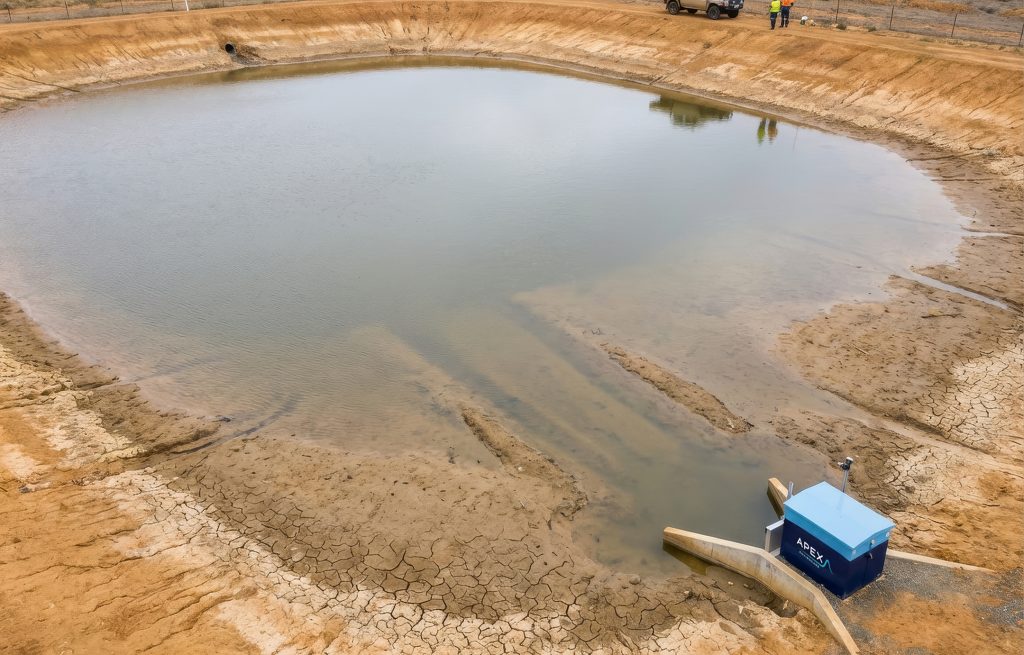
Western Australia’s ponds, dams and stormwater basins quietly perform critical work every day — managing runoff, storing process water, or protecting sensitive environments. But over time, these water bodies slowly lose capacity as silt, sludge and organic matter build up on the bottom.

Left unchecked, this sediment accumulation leads to flooding, odour issues, environmental non-compliance, and expensive asset failure. That’s where dredging comes in.

What Is Dredging?

What Is Dredging?

At its simplest, dredging is the controlled removal of sediment, sludge and debris from the bed of a water body such as a pond, canal, dam or lagoon. It restores lost depth, improves water quality and keeps systems operating as designed.

Unlike large-scale port or river dredging for navigation, inland and industrial dredging focuses on maintaining functional capacity and compliance — not shipping channels. These smaller-scale projects typically occur in:

  • Stormwater basins and retention ponds
  • Agricultural effluent or irrigation dams
  • Mine site tailings and process water ponds
  • Wastewater treatment lagoons
  • Residential canals and estates
  • Council wetlands and ornamental lake
Why Sediment Builds Up

Why Sediment Builds Up

Every open water body collects suspended solids over time. In Western Australia, that process is accelerated by a few key factors:

  • Runoff from farmland or roads, which carries soil, fertiliser and organic matter
  • Algal growth and decay, which settle on the pond floor
  • Windblown dust during dry months
  • Erosion of banks or inflow channels, particularly after heavy rain events
  • Industrial process water, which introduces fine tailings, sludge or bio-solids

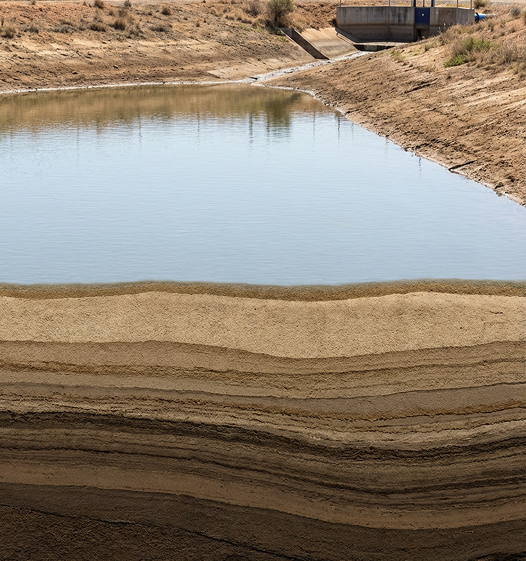
Even when solids are microscopic, they accumulate year after year — forming compacted layers of silt that reduce capacity and disrupt normal operations.

What Problems Does Dredging Solve?

A neglected water asset can trigger a chain of problems for councils, farmers, or industrial operators:

Issue Impact
Reduced capacity Less storage volume for stormwater, effluent, or process water — leading to overtopping or flooding
Poor water quality Nutrient-rich sediment encourages algal blooms, odours and mosquito breeding
Equipment damage Sludge and solids interfere with pumps, aerators and valves
Regulatory non-compliance Breach of licence conditions or EPA standards for discharge quality
Community complaints Odours, stagnant water, or visible scum near residential areas
High maintenance costs Excavating or rebuilding ponds later is far more expensive than maintaining them through dredging

By removing sediment before it causes system failure, dredging keeps assets functioning safely and predictably.

How Dredging Works

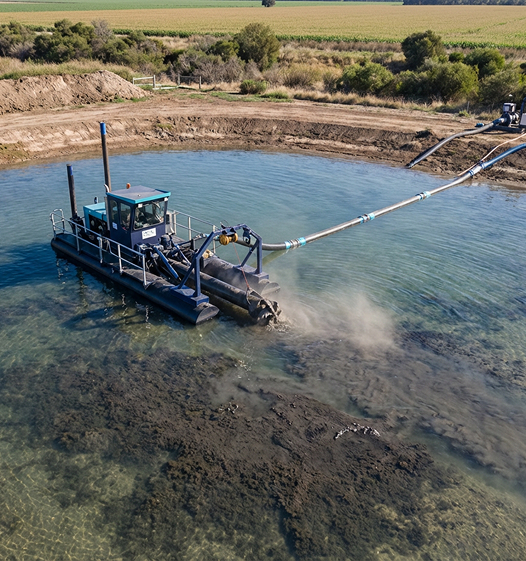
There are several ways to dredge, but most inland and industrial sites use hydraulic dredging — a clean, efficient method that allows assets to stay operational during works.

Hydraulic Dredging
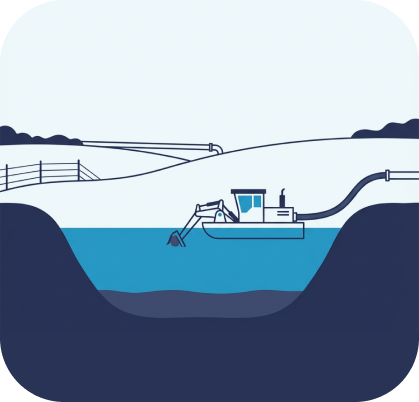
A floating dredge uses a suction pump to draw up sediment and water, creating a slurry that’s pumped through a pipeline to a dewatering area or containment cell.

This method:

  • Minimises disruption to existing infrastructure
  • Is ideal for lined ponds or sensitive environments
  • Reduces excavation, trucking and environmental risk

Mechanical Dredging
Used when access is easy or sediment is very compacted. Excavators, amphibious vehicles or long-reach cranes remove material directly.
While effective, mechanical dredging usually requires water to be drained — meaning more downtime.

Dewatering & Disposal
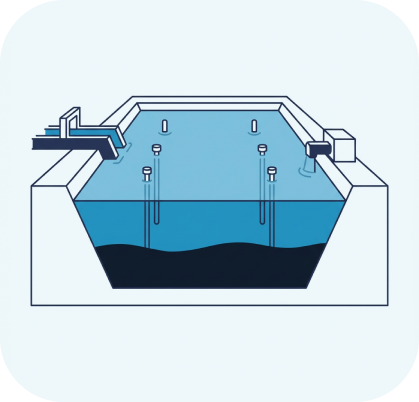
Once removed, slurry passes through geotextile tubes or mechanical presses to separate solids from water. The clear water is returned to the system, and the dry solids can be repurposed, landfilled, or spread (subject to testing).

Benefits of Regular Dredging

For councils, utilities, mine sites and agribusiness, proactive dredging isn’t a luxury
— it’s asset protection. Key benefits include:
Restore Design Capacity

Restore Design Capacity

Recover the original volume of dams, ponds and canals, allowing them to safely contain runoff and effluent.
Maintain Compliance

Maintain Compliance

Avoid breaches of water quality standards or overflow events that could attract environmental penalties.
Improve Water Quality

Improve Water Quality

Removing nutrient-rich sludge helps control odour, algae and bacteria growth — protecting surrounding ecosystems and communities.
Extend Asset Life

Extend Asset Life

Sediment wears out liners, pumps and aeration systems. Dredging protects that infrastructure investment.
Reduce Downtime

Reduce Downtime

Modern hydraulic dredging often allows systems to stay online while sediment is removed — critical for mines and utilities that can’t stop production.
Lower Long-Term Costs

Lower Long-Term Costs

Preventative dredging is far cheaper than rebuilding a failed pond or remediation after a spill.

Applications Across WA Industries

Icon

Stormwater & Local Government Assets

Councils across Perth and regional WA maintain hundreds of retention basins, drainage lakes and wetlands. Over time, these assets fill with debris, reducing flow capacity and increasing flood risk.

Dredging keeps them compliant with Water Corporation and Department of Water & Environmental Regulation (DWER) standards while improving amenity for local residents.

Icon

Agribusiness & Farm Dams

Effluent ponds and irrigation dams on dairy, beef and pig farms often accumulate solids and manure sludge. This can reduce storage capacity and cause odour or nutrient leaching.
Dredging restores efficiency and helps meet Department of Primary Industries and Regional Development (DPIRD) environmental guidelines.

Icon

Mining & Industrial Processing

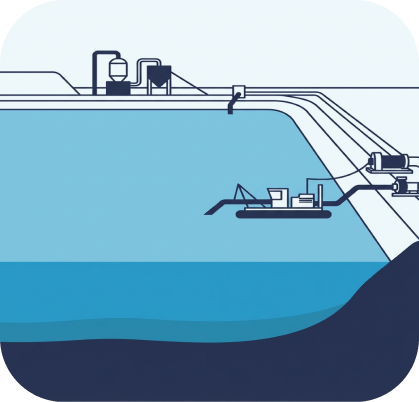
Mine sites rely on tailings, thickener and process water ponds to separate solids and manage water reuse. When these fill with sediment, pumping efficiency drops and contamination risk rises.
Hydraulic dredging allows these critical ponds to remain in use while removing accumulated fines — keeping production on track.

Icon

Wastewater Treatment Ponds

For utilities and private operators, sludge build-up can cause treatment imbalance, short-circuiting and odour issues. Regular dredging extends lagoon life and reduces the need for total desludging shutdowns.

Icon

Residential Canals & Estates

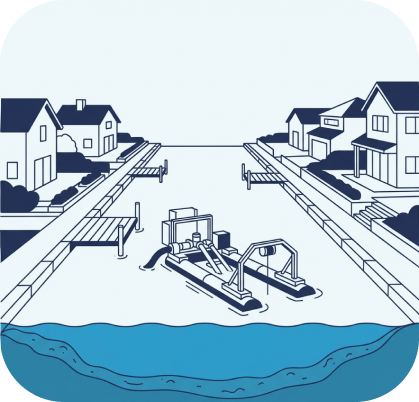
In coastal and riverfront communities, shallow canals quickly lose depth due to silt and bio-growth. Dredging maintains navigable depth, water clarity and property values.

Environmental
and Compliance Considerations

Dredging must be carried out carefully to protect downstream environments. At Apex Envirocare, projects are designed to comply with:

  • Department of Water and Environmental Regulation (DWER) licences
  • EPA guidelines for waste handling and discharge
  • Controlled waste tracking regulations
  • Local council requirements for sediment disposal and reinstatement

Every project includes environmental management plans, water quality monitoring, and waste classification to ensure compliance from start to finish.

Why Choose a Professional Dredging Partner

Dredging may sound simple, but it requires the right combination of engineering design, environmental management, and on-site experience.

Apex Envirocare brings more than 20 years of Western Australian expertise in:

  • Hydraulic and mechanical dredging
  • Sludge dewatering and geotextile tube management
  • Stormwater, effluent and process water rehabilitation
  • Site-specific compliance documentation and reporting

Our local crews understand WA conditions — from regional mine tailings in the Pilbara to coastal canals in Mandurah and municipal wetlands across Perth.

When Should You Dredge?

The ideal time to dredge depends on the asset type and seasonal conditions:
Stormwater
ponds

Stormwater
ponds

late summer to early autumn (before winter rainfall)
Agricultural effluent dams

Agricultural effluent dams

dry season when inflows are lowest
Industrial or mining ponds

Industrial or mining ponds

during planned maintenance windows
Residential canals

Residential canals

when water levels and tides are most stable
A simple bathymetric survey or sludge depth test can confirm when sediment levels are impacting performance.

Dredging vs.
Rebuilding a Pond

Many asset owners assume a failed pond must be rebuilt — but that’s rarely the case.

Hydraulic dredging can often recover 70–90% of lost capacity for a fraction of the cost of excavation, with minimal disruption and no need to drain the pond.

It’s faster, cleaner, and more sustainable.

Future-Proofing
Your Water Assets

With climate variability and extreme weather events on the rise across WA, stormwater and wastewater infrastructure are under more pressure than ever. Preventative dredging ensures those systems continue to perform when they’re needed most.

Regular sediment management forms part of an effective asset maintenance schedule, reducing reactive works and protecting budgets long-term.

Talk to the WA Dredging Experts

If you manage a pond, dam, canal or lagoon that’s showing signs of reduced depth,
odour or poor water quality, now is the time to act.

Apex Envirocare’s specialist dredging team can assess your site, measure sediment build-up, and recommend the most efficient dredging solution for your operation. Contact Apex Envirocare to discuss your dredging requirements and schedule a no-obligation site consultation.

Frequently Asked Questions

— Dredging in Western Australia

Dredging is the removal of built-up sediment, sludge and debris from the bottom of water bodies such as ponds, dams, canals and lagoons to restore depth, capacity and water quality.

Stormwater basins collect silt, leaves, sand and organic matter over time. Dredging prevents blockages, restores capacity before winter rain and helps councils meet environmental compliance.

Yes. Hydraulic dredging allows sediment to be removed while the pond remains full and operational, avoiding shutdowns and protecting liners and infrastructure.

Most effluent ponds need dredging every 3–7 years depending on inflow rates, nutrient loading and climate. A sludge depth survey can determine exact timing.

Yes. Removing accumulated fines maintains pump efficiency, protects liners and prevents compliance breaches from overtopping or poor discharge quality.

Slurry is pumped to a dewatering system such as geotextile tubes. Once solids dry, they are tested and either reused, landfilled or managed under EPA-approved disposal pathways.

Most industrial, utility and council sites require compliance with DWER, EPA and local authority conditions. Professional dredging contractors manage permitting and documentation.

© Apex Envirocare 2026 All rights reserved.

Site Design and Developed by [CM]